Mercury, the smallest planet in our solar system, is known for its incredibly hot surface and short years. However, one thing that often goes unnoticed is the length of a day on this planet. In this article, we will explore the fascinating world of Mercury and its unique rotation.
What is Mercury?
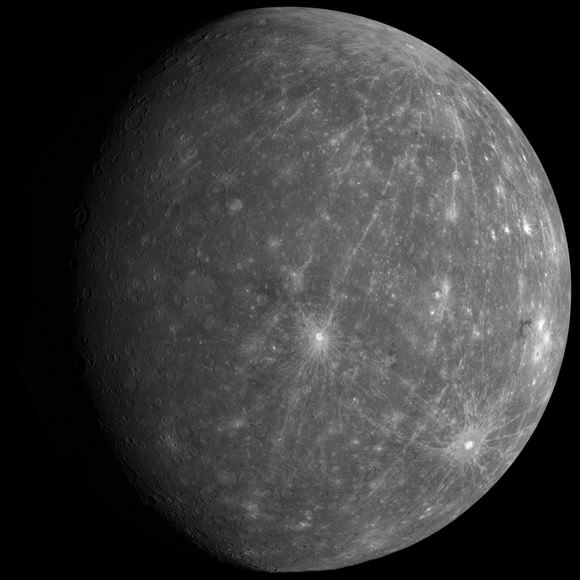
Mercury is the smallest planet in our solar system and the closest one to the sun. It is named after the Roman messenger god, Mercury, due to its fast orbit. Mercury is about one-third the size of Earth and has a rocky surface with many craters and mountains. It has a thin atmosphere, which is mostly made up of helium and hydrogen.
Rotation of Mercury

Mercury rotates on its axis at a much slower rate than any other planet in our solar system. It takes about 59 Earth days for Mercury to complete one rotation. This means that a day on Mercury is almost two times longer than its year, which only lasts 88 Earth days.
Why does Mercury rotate so slowly?

Scientists have been studying Mercury's rotation for many years, trying to understand why it rotates so slowly. One theory is that Mercury's slow rotation is due to the gravitational pull of the sun. The sun's gravity causes the planet to experience tidal forces that slow down its rotation. Another theory is that Mercury may have been struck by a large object early in its history, which caused it to slow down.
Mercury's Uneven Rotation

Mercury's rotation is not only slow, but it is also uneven. The planet has an axial tilt of only 2.11 degrees, which means that it has almost no tilt. This results in a lack of seasonal changes on the planet. Additionally, Mercury's rotation is also affected by its orbit around the sun.
Mercury's Orbital Resonance

Mercury's orbit around the sun is also unique. It is the most eccentric orbit of all the planets in our solar system, which means that it is not a perfect circle. Additionally, Mercury's orbit is in resonance with its rotation. This means that for every two orbits that the planet makes around the sun, it rotates three times on its axis. This orbital resonance helps to stabilize Mercury's rotation and keep it from becoming chaotic.
Conclusion
Mercury's slow and uneven rotation is just one of the many unique features of this small planet. Despite its small size, Mercury has a lot to offer in terms of scientific discovery. By studying Mercury's rotation, scientists can gain a better understanding of the formation and evolution of our solar system.